In humans, there are 75 to 80 lashes on the lower eyelid, and the upper eyelid has 90 to 160 lashes.
Lash length is variable from individual to individual: they do not grow beyond a certain length (usually less than 12 mm) and then fall off by themselves.
Current thinking is that lash length is limited because the growth rate and anagen phase are shorter than those of scalp hair. Eyebrow hairs may be longer, especially with age.
Eyelashes generally do not need trimming unless there is excessive growth (trichomegaly). Ms. You Jianxia of Shangai holds the world record for the longest eyelashes in 2018: her lashes measure 12.40 cm!
After lash removal by pulling, it takes about eight weeks to grow back. Eyelash hair is not affected by puberty.
Lash Hair Follicle
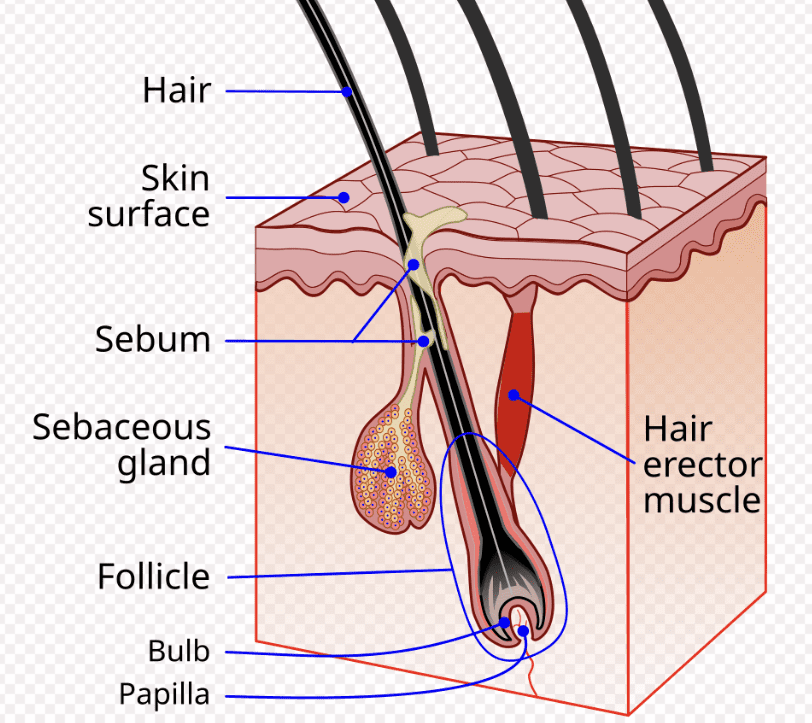
The eyelash follicle (follis, Latin for bag): the term follicle refers to the complex structure that is responsible for hair growth and is composed of the dermal papilla, which is connective tissue with a capillary loop, the germinal hair matrix around the papilla, and the lash root or bulb.
The germinal layer has dividing cells that give rise to the hair, and the bulb is where the process of keratinization begins.
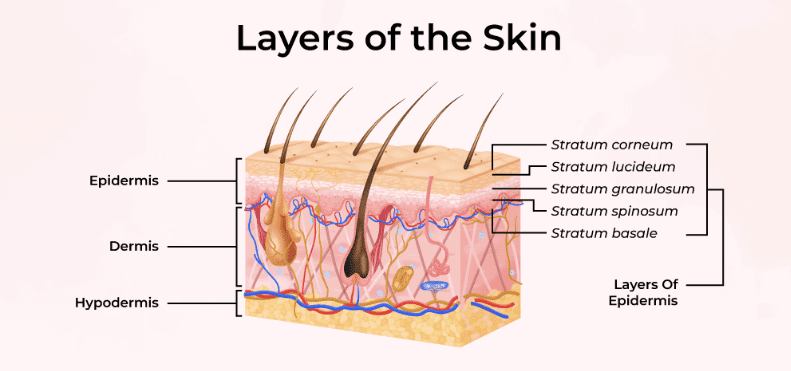
The hair follicle is embedded in the dermis of the eyelid (which has two layers, epidermis and dermis, as opposed to the scalp, which has an epidermis, dermis, and a hypodermis).
Eyelash follicles are 2.4 mm deep in the upper lid and 1.4 mm in the lower lid. There are more active lash follicles in the upper lid compared to the lower lid
The hair on the body has arrector pili muscles, which straighten the hair in the cold or in response to a strong emotion (fear, excitement), resulting in what is commonly termed “goose-bumps” or “goose pimples” because of the resemblance to plucked goose skin.
The lash follicle has no arrector pili muscles. Therefore, lashes do not change position in these circumstances.
Life Cycle of Lashes
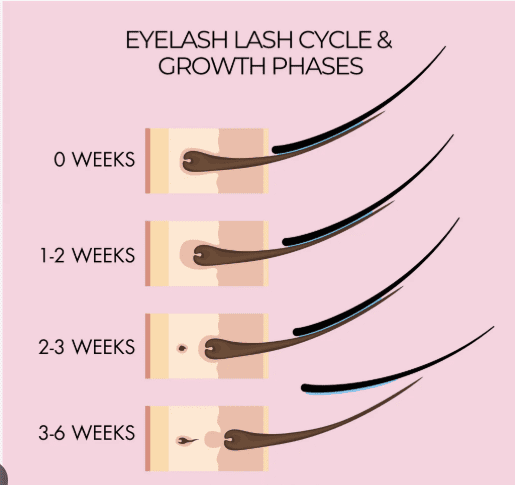
Lashes grow at 0.12 to 0.14 mm per day (as compared to scalp hair which grows at 0.2 to 1.1 mm per day). The three phases of lash growth in the eyelash growth cycle are:
The growth phase when the root of the hair is dividing lengthening the shaft (anagen) which varies from four to ten weeks.
The degradation phase (catagen) during which the lash converts to a club hair as the hair is cut off from the blood supply 15 days.
The resting phase (telogen) which causes shedding of the hair, lasts four to nine months.
Half the eyelashes are in an anagen phase: periocular hair has the lowest anagen to telogen ratio. After the telogen phase, the lash falls out, and the cycle begins anew with the anagen phase. The whole lash cycle is from four to eleven months.
The stages of the life cycle of lashes compared to the eyebrows and the scalp is as follows:
Telogen phase, about 3 months.
Eyebrows:
Anagen phase, 4 to 7 months
Catagen phase, 3 to 4 weeks
Telogen phase, around 9 months
Scalp: genetically determined and varies from person to person.
Anagen phase, 2 to 8 years (can be longer)
Catagen phase, 2 to 3 weeks
Telogen phase, about 3 months