
Course Overview
This 12-week Complete Nail Technology Qualification is designed for beginners or beauty professionals who want to gain the confidence and skills needed to become a professional, accredited nail technician.
Start your own business as a nail tech; AINT graduates are earning €140 per day! Others report that they earned € 1,000 during Christmas week.
Why Choose Our Course?
-Accredited Courses: You are guaranteed to be able to get professional Indemnity insurance
-Become a member of the largest beauty membership in the UK & Ireland. Includes free access to the yearly Beauty Show in the RDS.
-Earning Potential: Imagine earning up to €40 per hour as a nail tech!
-Financial Security: Learn a new skill to help recession-proof your family and provide immediate income.
-Career Change: Upskill and embark on a rewarding new career path.
-Flexible Schedule: Enjoy the freedom to fit your work around a busy lifestyle.
-Escape the 9-5 Grind: Say goodbye to the traditional rat race and embrace a fulfilling career in nail technology
Course Duration: 12 weeks (Or two classes per week for 6 weeks)
Cost: €970 (ask about grant availability). Instalment options available
Click the link for a getting started guide: https://aintnailz.ie/getting-started-guide/
You will receive a FREE professional kit
Your professional kit contains the following: 48-watt UV/LED combo lamp, 15ml Jelly builder cover pink gel, 15ml top-coat, 12ml base-coat, 125ml tip remover, 125ml antiseptic, 200 tips, pink tip clippers, glue, 2 180/180 grit files, 5 orange sticks, 2 white buffing blocks.
Next Start Dates:
April
– Tue, 7th for 6 weeks
May
– Tue, 5th for 6 weeks
June
– Tue, 2nd for 6 weeks
Certification Provided.
Upon obtaining your professional insurance, you will be recognised as a Certified Professional Technician.
This certification allows you to have your name and business details listed on the Associated Irish Therapists (AIT) website, the largest beauty membership platform in Ireland and the UK. Enjoy the numerous benefits that come with being part of this esteemed network.
Day: Tuesdays & Thursdays from 10 am-1 pm for 6 weeks
Evening: Tuesdays & Thursdays from 6 pm – 9 pm (on the same dates) for 6 weeks
Contact: Deborah on 0877998915 or DM on FB or email: info@aintnailz.ie
What You’ll Learn
Theory course notes include:
Personal & professional development: (Optional)
-Writing a current CV
-Choosing a business name
-Registering a business name with CRO (Company Registration Office)
-Registering a business name with ROS (Revenue Online Services)
-Building an online presence through FB, Instagram, TikTok
-Building an online professional web brochure (optional, not included)
-Professionalism related to Beauty/Complementary or Sports Therapy, and explain the appropriate professional
-Preparation – The student prepares herself and the client for professional treatment
-Consultation form
-Disclaimer form
-Aftercare advice form
-Structure and function of the nail
-Structure of the bones of the hand & forearm/foot
-Nail anatomy sample exam questions and answers
-Nail disease and disorders
-Nail disease and disorder sample exam questions and answers
-Professionalism related to Beauty/Complementary or Sports Therapy and explain the appropriate professional
-Preparation
–The student prepares herself and the client for professional treatment
Practical work:
Nail Preparation. Manicure preparation
-Safley push back the cuticle without damaging the delicate Matrix (the growing section of the nail).
-Buffing the natural nail without damaging the surface.
-Filing the natural nail without fraying the edges.
-Nail polish application in 3 strokes.
Tip Application
-Application of plastic tips without air bubbles.
-Choosing the correct nail tip.
-Positioning the right size tip for each fingernail
-Tip blending & shaping.
-Safe use and storage of professional nail glue
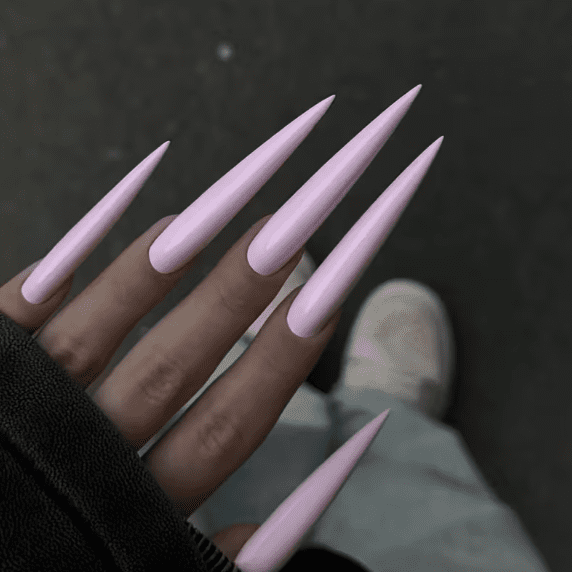
-Professional shaping: Square, Squoval, Stiletto, Coffin, long and short Almond.
Product Application
-Application of BIAB leaving a perfectly smooth and straight line around the edges.
-Application of cover-pink gel
-Application of permanent French tip gel,
-Application of gel polish.
-E-file techniques for nail prep, tip application, and final buff.
Followup and Maintenance Treatments
-Safe refill procedure techniques.
-Safe removal procedure. -Repairing a broken nail.
Note: The exam class will be discussed with your tutor.
Note: You are required to do a portfolio, containing before & after pictures of 6 full sets of gel nail extensions, 4 sets of acrylic nail extensions, and 2 gel-polish nails, with completed consultation/ disclaimer & aftercare forms
What You’ll Earn
Nail Technology Treatment List
BIAB Extensions €45 – 1.15hrs
-Add nail art €50 – 1.45 hrs
BIAB Extension Refill €40 – 1 hr
Gel/Acrylic Extensions €45 – 1.15 hrs
– Add nail art €50
Gel/Acrylic Refill €45 – 1.15hrs
-Add nail art €50
BIAB/ Gel Polish €35 – 1.15hrs
Manicure €25
-Add BIAB/ Gel Polish €35 – 1 hr
Pedicure €35
-Add BIAB/ Gel Polish €45 – 1 hr
NB (The times allotted for each treatment are estimated; your treatment may take longer)
Social media interaction:
Social media interaction with your tutor and group via private group messaging. Here you can share concerns, pictures, and ask questions on a dedicated Facebook private group page.
In addition to all the skills you learn, we will decide together on a business name for you.
Next, we start advertising you on your new social platforms.
Advertising strategies:
-Create Eye-Catching Posts
-Use high-quality images of your work.
-Engage with Followers: Respond to comments and messages promptly.
-Run Promotions: Offer discounts for first-time clients or referral bonuses.
Finally, start creating content to share and build a client base
Your professional kit:
Your Jelly Builder Cover-Pink Gel is perfect for creating the elegant, popular cover-pink nail extension and forms a perfect nail bed for French tips. Our specially formulated cover-pink gel & acrylic products are hypoallergenic and has primer built-in, so there is no need for harmful priming products that dry out your nails. It is ideal for even the most sensitive client.
Documents available for you to download at any time
-Client consultation form
-Disclaimer client information
-Aftercare advice sheet
-All course notes
Hey! I’m ”Deborah”
Join my comprehensive course to master all nail technology techniques, including BIAB, gel, dip-acrylic, and e-file. This course is perfect for both new and established beauty artists looking to elevate their skills.
You’ll learn how to maintain your BIAB and gel extensions to prolong wear, as well as safe removal techniques to protect your natural nails. We’ll also cover troubleshooting common issues like lifting and bubbles, and I’ll keep you updated on the latest nail trends for inspiration in creating your own unique styles.
Let’s keep in touch
What our students say
6-WEEK GEL TECHNOLOGY COURSE
Huge thanks to @aintnailz for her support and guidence on helping me get my nail technology certificate! So grateful and excited for what’s next!
Lucy O’Brien.
@https://www.instagram.com/nailedbyylucy/

12-WEEK COMPLETE NAIL TECH COURSE
This course with Deborah was amazing dedicating a couple of hours a week to your practice really helps you to improve quickly under her guidance I flew through my course learning how to do both gel and acrylic which has greatly benefited me as my clients can choose between both. The happy and cheerful atmosphere of Deborah’s classes allows you to relax when you walk through her doors, if you are thinking of doing any courses Deborah is who I’d call
Elaine Conway.
@nailz_byelaine
12-WEEK COMPLETE NAIL TECH COURSE
At my age, doing the 12-week nail tech course was a bit daunting at first, but I have to say I enjoyed every minute of it. Deborah is an amazing teacher and made learning a new skill very enjoyable. I would recommend anyone who is upskilling to give this course a try; it is definitely worth the effort and the time.
Gillian McD.
https://www.facebook.com/gillian.m.dermott